


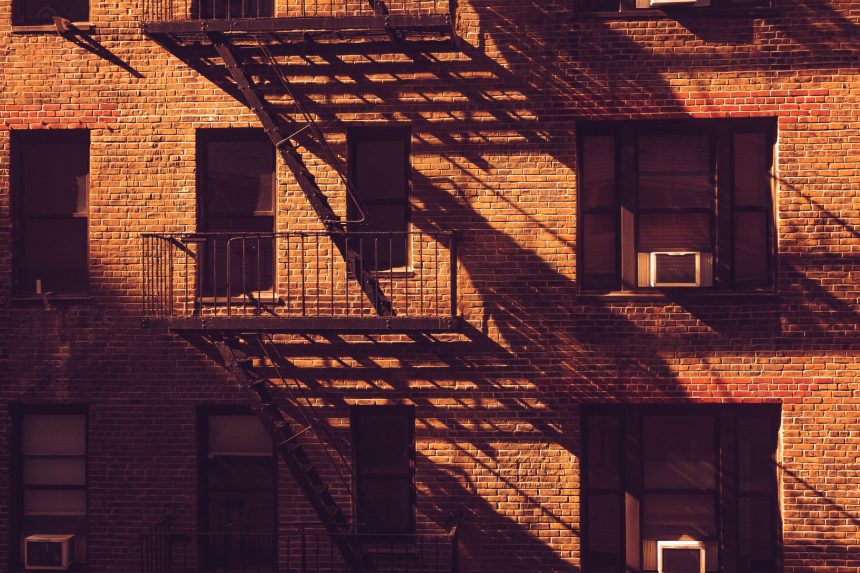
Amanda Gomez submitted hundreds of rental applications for an apartment in Harlem, New York, last year. Most were met with silence. Fifteen, however, were outright rejected. When she subsequently noticed the same apartments relisted five or six times, Gomez suspected racial discrimination.
In 2024, housing discrimination complaints filed with the federal government totalled 32,321, marking one of the highest totals in the past two decades, according to the National Fair Housing Alliance (NFHA), a non-profit fair housing advocacy organization. But even as these complaints were climbing nationwide, the people in charge of evaluating them were disappearing: deep staff reductions at the Department of Housing and Urban Development (HUD) and funding cuts at nonprofit fair housing groups have left Gomez’s and many other people’s complaints unanswered — and millions of people with fewer protections.
With the government sidelining its watchdog role and slashing the budgets of nonprofits meant to fill the gap, housing experts warn of the possibility of more openly discriminatory practices against renters and buyers in the year ahead. That means consumers may face more rejections, fewer places to have their voices heard and a housing system that increasingly feels stacked against them.
For 36 years, Gomez has lived in Harlem, surrounded by Black, Latinx, Caribbean and working-class immigrant stories layered together. Harlem is what she calls home and what she says shaped her into the college and career educator she is today. But in March 2025, her landlord raised the rent for the apartment she shared with her partner by $500. With their lease ending in May, the couple had no choice but to search for a new place to live. It proved to be a monumental task.
For every application, Gomez submitted detailed supporting documents, including landlord references, rent receipts, medical records explaining her mid-600s credit score and more. Still, landlords kept blaming the couple’s credit scores, even though they met or exceeded the requirements.
“It feels like they’re collecting fees and waiting for a dream tenant: someone in tech, a 700 or 800 credit score, white, with generational wealth,” she says. “It’s being born and raised in the neighborhood and working there and being told silently, subtly, that you’re not the gentrified type they want. That’s what modern housing discrimination looks like.”
What housing discrimination is… and isn’t
Housing discrimination happens when someone is treated unfairly in the process of renting or buying a home. The Fair Housing Act of 1968 prohibits discrimination on the basis of someone’s race or color, age, disability, religion, national origin or familial status.
Poor credit, insufficient income or inability to pay rent can be legal reasons for denying the rental or sale of a home. However, these justifications can sometimes be used as cover when discrimination is the real motive. Discrimination isn’t always blatant; it can be subtle. HUD is tasked with enforcing the Fair Housing Act and investigating these types of complaints.
HUD’s help line is ‘closed for business’
HUD plays a critical role in enforcing the nation’s fair housing laws, but recent cuts have sharply limited the resources needed to address harmful housing practices.
It’s being born and raised in the neighborhood and working there and being told silently, subtly, that you’re not the gentrified type they want. That’s what modern housing discrimination looks like.
— Amanda Gomez
The biggest losses have hit HUD’s Office of Fair Housing and Equal Opportunity (FHEO), which enforces federal fair housing laws. According to a whistleblower disclosure submitted by civil rights attorneys at HUD to Sen. Elizabeth Warren (D-MA) in August, the FHEO has lost nearly 70% percent of its attorneys since January 2025.
“There was a time when, if you said, ‘I’m going to cut 70% of the staff of an organization dedicated to eliminating discrimination,’ that would be seen by the country as horrible,” says Craig Waletzko, communications coordinator for the Fair Housing Justice Center in New York City. “You do what you can get away with, I guess.”
Historically, regional HUD field offices allowed for efficient, informal resolution of complaints, often without a lawyer, explains Sasha Samberg-Champion, special counsel for civil rights at the NFHA. However, after deep staffing cuts, all complaints now go through a centralized online system. Even minor cases require formal HUD approval, creating procedural roadblocks. He adds that staff, who are already anxious about their job security, are increasingly reluctant to escalate issues.
“The bottom line is that HUD is essentially closed for business when it comes to fair housing discrimination complaints,” he says. “I don’t know that I could advise anybody to file a complaint with HUD and expect to get any justice there.”
On top of those cuts, HUD attempted to eliminate more than 100 workers during the 2025 government shutdown, which would have trimmed a significant share of the remaining FHEO staff. Congress temporarily halted those layoffs, but with another shutdown possible on Jan. 30, 2026, the threat of additional staffing and enforcement reductions hasn’t ended.
“Some of this story has yet to be written,” says Samberg-Champion. “As of Jan. 30, the new law’s protections will expire. Everyone understands the administration wants to reduce FHEO further. There are a few people left at the FHEO and the people that are left understand that they have a sword hanging over their head.”
Another housing protection dismantled
In April, President Donald Trump signed an executive order directing agencies to eliminate “disparate-impact liability” whenever possible.
For over five decades, since the passing of the Fair Housing Act of 1968, disparate impact claims have been upheld by the Supreme Court and numerous Appellate Courts. The legal tool allows regulators to challenge policies that seem neutral but result in disproportionately hurting certain groups. For example, a landlord or lender may set a high credit score requirement to rent or buy a home. While this may seem fair on the surface, the rules can disproportionately affect Black and Hispanic renters and buyers who face historical and systemic barriers to building credit.
In late 2025, the Consumer Financial Protection Bureau (CFPB) said it would close all fair lending investigations focused on disparate impact liability. Going forward, the CFPB says it will instead focus its enforcement resources on cases involving intentional discrimination. Just one month later, HUD issued its own proposed rule changes that would weaken the implementation of disparate impact.
“In this particular moment, the federal government is not keeping a watchful eye over the various forms of housing discrimination and lending discrimination that can occur,” says Jesse Van Tol, president and CEO of the National Community Reinvestment Coalition. “As companies start to adjust to the new rules of the road, you may see a rise in discriminatory policies and practices in 2026.”
When asked to comment on the rule changes and job cuts at HUD, a spokesperson told Bankrate the agency is focused on ensuring its “finite resources are no longer being diverted to investigate meritless cases.” Fair housing advocates warn that the moves could decimate decades of hard-fought housing protections for marginalized communities.
For Gomez, disparate impact is not a concept; it’s personal.
She and her partner’s steady incomes and credit scores in the mid-600s met or exceeded the credit score requirements for the apartments. Yet, at four apartments, the couple was told they needed a personal guarantor earning 80 times the rent. For one $3,200 unit, that meant someone making at least $256,000 a year would have to ensure the rent would be paid if they couldn’t.
“They [landlords] hide behind policies that sound neutral, but in practice, they disproportionately affect disabled people, people of color and working-class people,” Gomez protests. “They take advantage of the fact that most people don’t know, and we’re not really taught, how the financial system works. They claim that it’s neutral. But credit scores are extremely fragile. The part that they don’t look at is that most people are one medical emergency away from their credit score tanking.”
Local fair housing groups are near collapse
When federal enforcement falters, local fair housing organizations are supposed to fill the gap, but many are struggling to stay afloat.
The Tennessee Fair Housing Council (TFHC) is one of many organizations that relies on HUD for a majority of its budget, about 80%-85%, as per TFHC executive director Martie Lafferty.
TFHC’s reimbursement grant was supposed to arrive in spring 2025. But in early 2025, the Trump Administration blocked congressionally appropriated funds for community-based fair housing agencies that receive funding through HUD’s Fair Housing Initiatives Program (FHIPs), some of which were in the second or third year of multi-year grants.
“These organizations handle the majority of fair housing complaints in this country, more than not just HUD, but also all the state and local agencies combined,” says the NFHA’s Samberg-Champion. “Most of the groups simply aren’t built to survive long gaps in federal support. The nonprofits on a very small budget had to endure months of essentially losing a vital source of funding.”
The NFHA and others sued the federal government to restore the funds and a resulting court order required that they be reinstated.
As of November, Lafferty says the TFHC still hadn’t received the funds. And this has crippled other fair housing organizations, too.
“The Fair Housing Center of Nebraska, which services clients in Nebraska and Iowa, closed while waiting for funding to arrive,” says Nikitra Bailey, executive vice president of the NFHA. Similarly, she says the North Texas Fair Housing Center (NTFHC) temporarily closed because it ran out of money while waiting for funding. The NTFHC has since been awarded a new grant, but its doors remain closed.
“Fair housing enforcement has ground to a halt,” says Bailey. “Community-based fair housing agencies that are responsible for three-quarters of all investigations are losing funding or closing altogether and every day, people are left with little to no recourse.”
What options do consumers still have?
Housing discrimination is heading into what seems like an imperfect storm in 2026: fewer resources, weaker enforcement and a chilling effect on anyone who tries to speak up. According to HUD’s whistleblower report, several employees who raised concerns that cuts would make it impossible for the agency to do its job were let go or reassigned.
“In 2026, we’re confronting a less fair playing field, an environment in which bad actors will be able to discriminate with the expectation of impunity,” says David Gonzalez Rice, senior vice president of policy at the National Low Income Housing Coalition. “Even apart from the policy changes themselves, what the administration is signaling about its intent emboldens bad actors even further.”
Nevertheless, Gomez, who is used to fighting through bureaucratic red tape to get her students what they need, was determined not to remain silent. She filed complaints with HUD, the NYC Department of Housing Preservation & Development, the NYS Division of Human Rights, the NYC Public Advocate, the NY State Attorney General, local housing groups and legal nonprofits, just to name a few. All of her petitions went unresolved.
“They’re all swamped, so either you don’t get a response,” she says. “Or they’ll say, ‘So sorry, we don’t have the resources to help you. Best of luck.’”
Fair housing advocates urge victims of discrimination not to be deterred by the recent developments at HUD. The Fair Housing Act is still the law and is intended to protect people from discrimination when they are renting or buying a home. While experts like the NFHA’s Samberg-Champion say “it’s unlikely you are going to get your rights vindicated by going to HUD,” consumers still have rights. The NFHA’s website can be a great source to find nonprofit fair housing organizations in your area. Some cases can even be resolved before filing an official complaint.
“If you do not have a fair housing nonprofit that covers your area, you can go to your state Human Rights Commission to file a complaint,” says Ian Wilder, executive director for the Long Island Housing Services. “Many counties and large cities also have their own human rights commissions.”
As Lafferty stresses, victims can also file housing discrimination lawsuits in state or federal court. “Fair housing organizations may be able to assist with some or all of these options or at least provide guidance about which options may be the best fit,” she says.
Securing housing in an unforgiving system
By September 2025, Gomez and her partner had finally landed a one-bedroom, one-bath, lower-floor Harlem walkup apartment. “It has been life-changing for my chronic pain and mobility,” she says. “It’s the first time I’ve exhaled in years.”
Gomez still feels battered and bruised from the experience. Did she finally get an apartment because her discrimination complaints were heard and resolved? Not by a long shot.
“The difference was that the realtor and landlord for the apartment we live in now actually read the materials [we submitted], asked questions and treated us like human beings,” Gomez says. “They saw the story behind the numbers. They did what every landlord should do from the start.”
Gomez’s realtor also revealed something in the process that raised her suspicions. Even though she had paid application and credit-check fees at multiple buildings, her credit hadn’t been pulled in months. “These denials weren’t about our actual qualifications; they were about filtering people out,” she says. “Credit was just the safest excuse to hide behind.”
Scars from the experience remain, though, and Gomez is bracing for what may come next.
“The thought of rent increases or another forced move is even more terrifying,” she says. “I know what waits on the other side: a brutal market ready to tell me again that I don’t deserve housing because of a number designed to exclude the very people who built this city.”
Even so, Gomez aspires to be able to buy a home for herself and also her mother, but understands that hope may remain nothing but a pipe dream.
“Federal agencies have the power, and state agencies see the people. But when both sides are weakened or overwhelmed, renters like me fall into a no-man’s land where discrimination happens in plain sight and no one has the authority, the resources or the will to intervene,” she insists. “Without the protections from HUD and the CFPB, now what?”
Why we ask for feedback
Your feedback helps us improve our content and services. It takes less than a minute to
complete.
Your responses are anonymous and will only be used for improving our website.
Help us improve our content
Read the full article here


